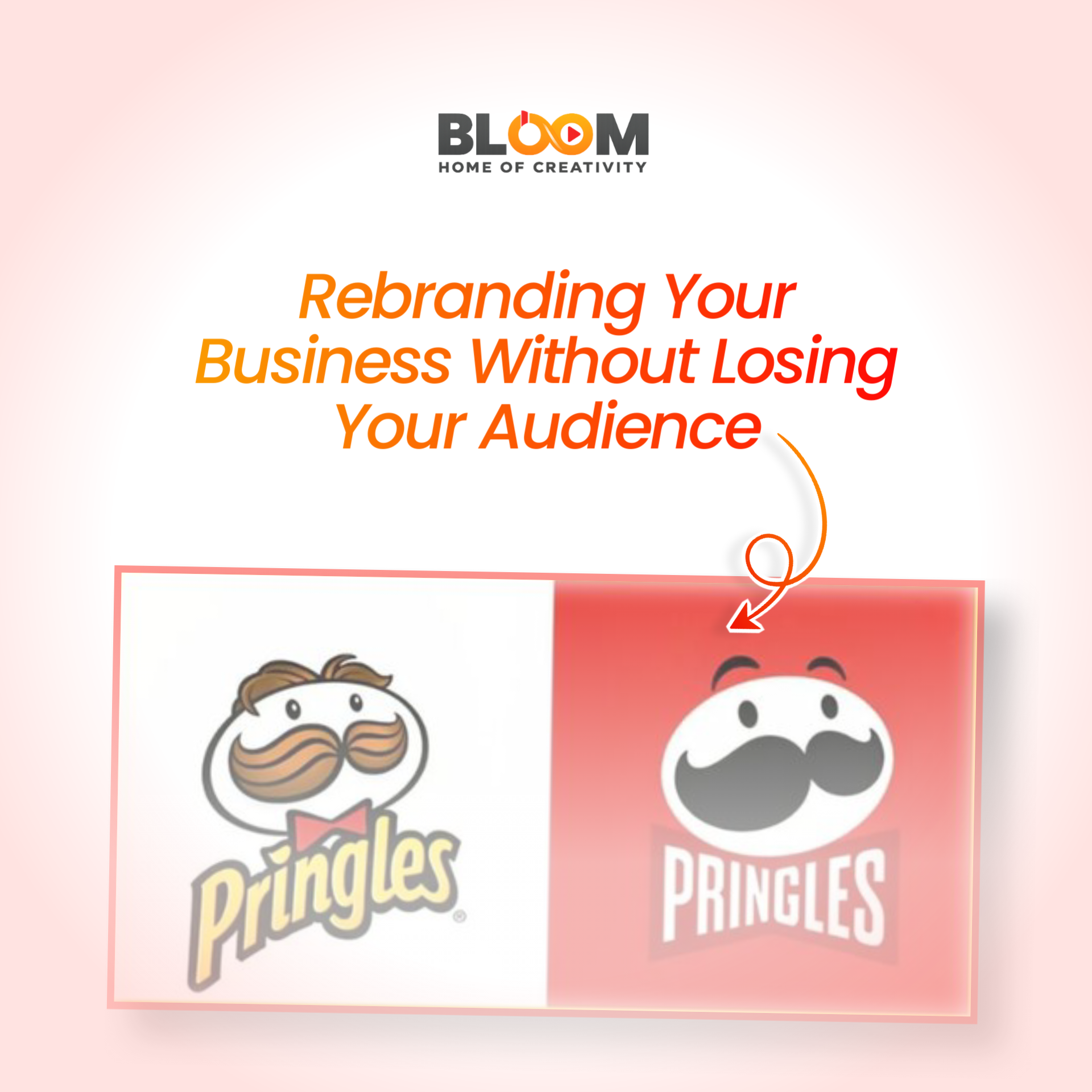
When Pringles refreshed its brand identity, the change was impossible to miss. The logo became cleaner, the iconic Mr. P character was simplified, and the packaging took on a more modern look. Yet even with all those updates, the brand did not feel unfamiliar, the mustache stayed, the playful personality stayed, the unmistakable Pringles can stayed, and the new design moved to a flat, minimalist style, removing his hair and adding expressive, emoji-style eyebrows. The result felt fresh and current, but still unmistakably Pringles.
Although rebranding can breathe new life into a company, it can also confuse loyal customers if it is handled poorly. The good news is that a successful rebrand does not mean leaving your audience behind. It means bringing them along on the journey. Whether you are updating your logo, refining your messaging, or completely transforming your brand identity, the goal is to evolve while preserving the trust you have already built.
Business rebranding is the process of changing elements of your brand to better reflect your company’s growth, values, products, or target audience. This can include updating your visual identity, brand voice, website, marketing materials, or even your business name. Rebranding is not simply about making your business look modern. It is about ensuring your brand communicates who you are today, not who you were when you first started. A successful rebranding strategy strengthens your market position while maintaining the confidence of existing customers.
Businesses rebrand for many reasons. Some want to expand into new markets, while others are trying to attract a different target audience. Many brands rebrand to stay competitive in a changing industry, reflect business growth or new services, recover from negative public perception, or modernize an outdated brand identity. The most successful brands do not rebrand because they are bored with their logo. They rebrand because their business has evolved and their brand needs to evolve with it.
Before changing anything, it is important to identify what your customers already appreciate about your brand. Maybe they value your customer service, your friendly communication style, your consistent quality, or the values your business represents. These are the emotional connections that customers remember. During a rebrand, those connections should remain intact even if your visual identity changes.
You can gather this insight by conducting customer surveys, reviewing testimonials, monitoring social media conversations, and collecting feedback. Understanding what your audience values helps you protect the parts of your brand that matter most. It can be tempting to redesign your business because a particular aesthetic is popular. However, following trends without a clear business objective often leads to inconsistent branding.
It's important to keep your core brand values consistent. Your logo may change, your colors may change, and your website may change. But your mission, values, and commitment to customers should remain recognizable. If your business has always been known for reliability, innovation, affordability, or exceptional service, make sure those qualities remain central throughout your rebrand. People do not stay loyal to logos. They stay loyal to experiences.
Introduce Changes Gradually. A complete overnight transformation can feel overwhelming. Whenever possible, introduce changes in phases so your audience has time to adjust. You might first update your messaging, then your website, followed by your logo, packaging, and marketing materials. Gradual transitions reduce confusion and help customers adapt across different touchpoints.
After launching your new brand identity, make sure it is consistent everywhere your audience interacts with your business. Update your website, social media profiles, email signatures, business cards, marketing materials, product packaging, and advertisements. Consistent branding reinforces trust and helps customers quickly recognize your business despite the changes.
Rebranding is not about becoming someone else. It is about becoming a clearer, stronger version of who your business already is. The brands that successfully evolve are the ones that remember one important truth: customers value trust more than design.
At Bloom Digital Media, we believe every successful rebrand begins with understanding your audience, defining your purpose, and communicating your story with clarity. Because the strongest brands do not just change, they evolve alongside the people they serve. Contact us today.